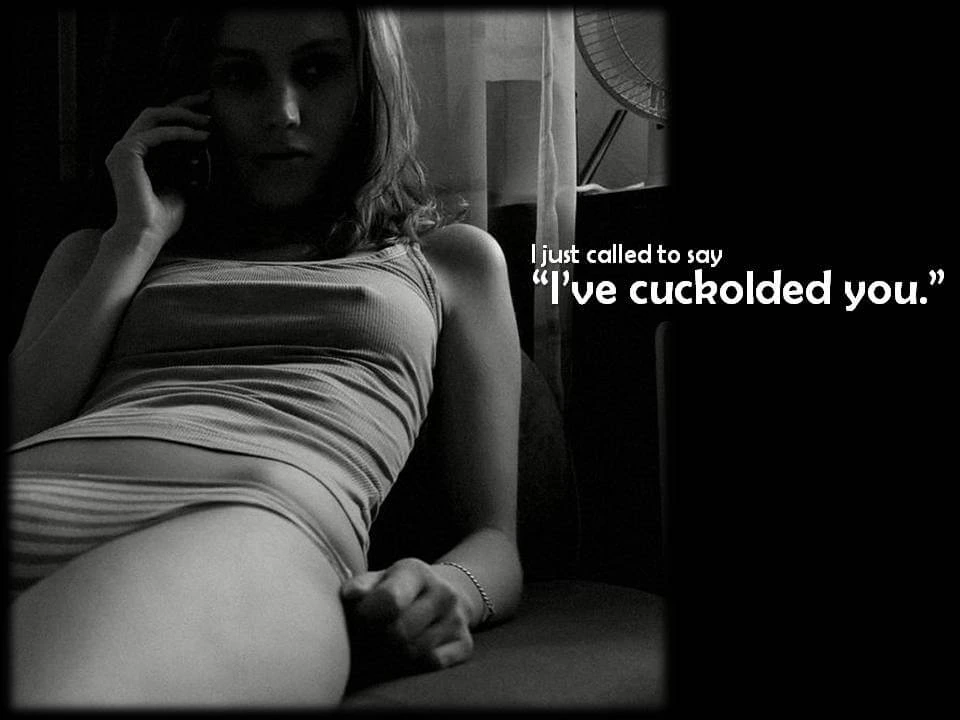
The Difference Between Cuckolding & Hotwifing
Cuckolding vs. Hotwifing: The Definitive Guide to the Difference
They share a surface similarity — but cuckolding and hotwifing are built on fundamentally different psychological foundations, power dynamics, and emotional contracts. Here is everything you need to know.
Why People Confuse Cuckolding and Hotwifing
At first glance, cuckolding and hotwifing look like the same thing: a woman in a committed relationship has sexual encounters with other men, with her partner’s knowledge and consent. That surface-level description is where the similarity ends.
The two lifestyles diverge sharply in their psychological motivation, power structure, emotional experience, and what each partner is actually seeking. Treating them as interchangeable is one of the most common mistakes made by people new to exploring consensual non-monogamy — and it frequently causes friction, mismatched expectations, and unnecessary pain in relationships.
This guide exists to draw that line clearly. Whether you are curious, exploring, or actively practicing one of these lifestyles, understanding the genuine difference between cuckolding and hotwifing is the foundation of doing either one well.
“The words matter because the feelings matter. Cuckolding and hotwifing ask different things of the male partner — and confusing them means asking for something neither person is actually prepared to give.”
What Is Hotwifing? A Complete Definition
Hotwifing is a consensual lifestyle in which a woman — typically in a committed marriage or long-term partnership — pursues sexual encounters with other men, with the full knowledge, encouragement, and often active enjoyment of her male partner.
The defining emotional tone of hotwifing is pride. The husband or male partner is proud of his wife’s desirability, takes pleasure in knowing she is wanted by others, and finds deep satisfaction in being the person she returns to. He may organize encounters, choose her partners, discuss experiences in detail, or simply enjoy hearing about her adventures afterward. His involvement is not passive: he is a willing, enthusiastic co-creator of the experience.
Whether it is a straight couple looking to add consensual non-monogamy into their relationship, a bisexual individual seeking sexual freedom, a mature curious dater searching for adult communities, a married couple inviting relationship enrichment, or newcomers in search of learning and support — knowing the distinctions between these two lifestyles can help point you in the direction that makes your relationship stronger.
Key characteristics of the hotwife lifestyle
In a healthy hotwifing dynamic, several elements are consistently present. The male partner experiences what is often described as compersion — the feeling of joy derived from a partner’s pleasure — rather than jealousy or submission. The woman, referred to as a hotwife, exercises considerable sexual autonomy but within a framework built jointly with her partner. The relationship remains the primary commitment; the outside encounters are additions, not replacements.
Critically, in hotwifing the male partner’s ego is intact, even elevated. He sees himself as the provider of an exciting life for a desirable woman. The experience reinforces rather than challenges his sense of self. There is no deliberate element of humiliation, comparison, or psychological submission involved — unless the couple specifically and consensually introduces those elements, which would begin to shift the dynamic toward cuckolding.
Key Definition
Hotwifing is a consensual arrangement centered on the husband’s pride in his wife’s sexuality. The male partner is an equal architect of the dynamic, experiences compersion over jealousy, and his self-esteem is affirmed — not tested — by the experience.
What Is Cuckolding? A Complete Definition
Cuckolding is a consensual lifestyle in which a man — referred to as the cuckold — derives erotic or psychological satisfaction from his partner’s sexual involvement with other men, often with a specific emphasis on feelings of jealousy, inadequacy, submission, or humiliation. The male partner who has sex with the hotwife is commonly called a bull.
Where hotwifing is built on pride, cuckolding is built on erotic power exchange. The cuckold’s experience is not one of comfortable compersion — it is one of deliberate psychological tension. Feelings of jealousy, inadequacy, or inferiority are not unfortunate side effects to be managed; in cuckolding, they are often the primary erotic engine of the dynamic.
The psychological architecture of cuckolding
Cuckolding typically involves a more pronounced power imbalance within the couple’s arrangement. The wife or female partner often holds a position of erotic authority; the male partner is in a position of erotic submission. The bull — the third party — may be deliberately positioned as superior to the cuckold in specific ways: physically, sexually, or socially. This comparison is not incidental; it is often central to what makes the experience arousing for all parties.
Humiliation — which can range from gentle teasing to explicit psychological domination — is a common feature of cuckolding, though its intensity varies enormously between couples. Some cuckold relationships include elements of chastity, denial, or service, where the male partner’s role becomes increasingly subordinate. Others are more emotionally understated, with the cuckold element being more internal and psychological than externally performed.
Key Definition
Cuckolding is a consensual erotic dynamic in which the male partner finds psychological and/or sexual satisfaction through jealousy, submission, and often humiliation. Power imbalance is not a side effect — it is a designed feature of the experience.
The 7 Core Differences Between Cuckolding and Hotwifing
The clearest way to understand these two lifestyles is to place them side by side across the dimensions that matter most.
• Primary emotion: Hotwifing centers on pride, compersion, and excitement. Cuckolding centres on jealousy, submission, and erotic tension.
• Male ego: In hotwifing, the male ego is affirmed and elevated. In cuckolding, it is deliberately challenged or diminished.
• Power dynamic: Hotwifing operates between equal partners who co-create the experience. Cuckolding is hierarchical — the wife and/or bull hold erotic authority.
• Humiliation: In hotwifing, humiliation is absent or incidental. In cuckolding, it is often present and central to the experience.
• The bull’s role: In hotwifing, the bull is a sexual partner, not elevated above the husband. In cuckolding, the bull is often positioned as dominant or superior.
• Emotional driver: Hotwifing is driven by shared pleasure and compersion. Cuckolding is driven by erotic psychological tension and power exchange.
• BDSM overlap: Hotwifing has little to no BDSM overlap by default. Cuckolding frequently overlaps with Dominant/submissive dynamics.
Hotwifing at a glance
• Husband takes pride in wife’s desirability
• Ego is intact and reinforced
• Both partners are co-architects
• Compersion is the primary feeling
• No power hierarchy required
• The bull is a guest, not a superior
• Focuses on shared erotic experience
Cuckolding at a glance
• Male partner eroticizes jealousy
• Ego is intentionally tested
• Power flows toward wife and/or bull
• Humiliation is often desired
• Submission is part of the appeal
• The bull may be positioned as dominant
• Focuses on psychological power exchange
The Psychology Behind Each Lifestyle
Understanding why people are drawn to cuckolding and hotwifing — separately — requires looking at what each experience actually delivers to its participants at a psychological level.
The psychology of hotwifing
For men in hotwife arrangements, the appeal is typically rooted in a combination of compersion (genuine pleasure at a partner’s pleasure), exhibitionistic pride (the desire to show off a desirable partner), and what researchers sometimes call sperm competition theory — a biological-evolutionary underpinning in which the prospect of competition paradoxically heightens arousal and emotional bonding. Studies in evolutionary psychology suggest that male arousal can increase in contexts of perceived sexual competition, which may partly explain the widespread but poorly understood appeal of hotwifing even among men who would describe themselves as emotionally secure and not submissive.
For women, hotwifing often represents a significant expansion of sexual agency and autonomy — the lived experience of being genuinely desired and empowered to act on that desire, within a relationship structure that feels safe and supported. Many women report that their primary relationship deepens substantially within a hotwife dynamic, as the added communication required builds unusual levels of intimacy and honesty.
The psychology of cuckolding
Cuckolding psychology is richer and often more complex. For the cuckold, the experience sits at the intersection of masochism (finding pleasure in psychological pain or discomfort), submission, and compersion. The jealousy or inadequacy the cuckold feels is not a dysfunction — it has been deliberately eroticized, transformed from an ordinary negative emotion into a vehicle for arousal and intimacy.
This is a remarkably sophisticated psychological process. The cuckold is not a victim of his feelings; he has learned to metabolize them erotically. Many men who identify as cuckolds report that the experience of consensual cuckolding has helped them process and understand jealousy in ways that make them emotionally freer — not more imprisoned — over time. For the woman in a cuckolding dynamic, the experience often involves the exercise of erotic authority — a form of Dominant power — which can be deeply affirming for women drawn to leadership, confidence, and control in erotic contexts.
“Cuckolding asks a man to alchemise jealousy into intimacy. Hotwifing asks him to transform pride into shared pleasure. Both are sophisticated — they just ask different things of the heart.”
Consent, Communication, and Boundaries
Both hotwifing and cuckolding are forms of consensual non-monogamy. The word consensual carries enormous weight here. Neither lifestyle can function — safely or sustainably — without ongoing, explicit, enthusiastic consent from all parties involved, including any third parties.
Communication in hotwifing
In hotwife relationships, communication typically focuses on logistics, preferences, and aftercare. Couples discuss which encounters to pursue, what boundaries exist with outside partners, how to handle scheduling and discretion, and how to maintain the primacy of the core relationship. Regular check-ins ensure that both partners remain genuinely enthusiastic participants rather than one person tolerating something for the other’s sake.
Communication in cuckolding
Cuckolding requires an additional and more psychologically nuanced layer of communication. Because the dynamic deliberately engages feelings of inadequacy, jealousy, or humiliation, couples must develop a sophisticated shared language around emotional limits, safe words, aftercare, and the difference between erotic play and genuine harm.
The cuckold must be genuinely consenting to the psychological experience — not simply enduring it to please a partner. The wife or female partner must be genuinely comfortable with the authority and responsibility that the dynamic confers on her. And any bull involved must understand the specific emotional architecture of the relationship he is entering.
Critical Point
The most important rule in both hotwifing and cuckolding is identical: consent must be ongoing, not assumed. Both partners’ enthusiastic participation must be confirmed regularly — not just at the beginning of the arrangement. What feels right at month one may need renegotiation at month six.
Cuckolding or Hotwifing: Which one Is Right for You?
There is no hierarchy between these two lifestyles. Neither is healthier, more sophisticated, or more valid than the other. They are simply different — and the right choice depends entirely on what both partners genuinely want and what emotional experience they are seeking.
Hotwifing may be the right fit if:
• The male partner’s primary feeling when imagining his wife with another man is excitement and pride rather than distress or submission.
•Both partners want to design the experience together as equal co-creators.
• The appeal lies in shared erotic experience, the expansion of the wife’s sexual life, and the deepening of the couple’s connection through honesty and trust.
• Neither partner is drawn to power exchange, submission, or humiliation as erotic elements.
Cuckolding may be the right fit if:
•The male partner finds that jealousy or the feeling of inadequacy — in a safe, consensual context — produces genuine erotic arousal rather than pure distress.
•There is an interest in power exchange, Dominant/submissive dynamics, or psychological edge play.
•The female partner is genuinely comfortable with holding erotic authority and exercising it confidently.
•Both partners have done the psychological work to distinguish between erotic submission and actual diminishment of the relationship’s foundation.
A note on drift and evolution
Many couples find that their dynamic evolves over time. A hotwife arrangement may gradually incorporate elements of cuckolding as both partners explore their desires more fully. Equally, a cuckolding dynamic may soften over time as the psychological edge becomes familiar and less charged. Neither direction is better or worse — what matters is that both partners remain genuinely enthusiastic participants and that evolution happens through communication rather than assumption.
Common Misconceptions About Cuckolding and Hotwifing
Misconception 1: The man is weak or pathetic
This is one of the most persistent cultural misunderstandings. Men who participate in hotwifing or cuckolding are not weak, confused, or lacking self-respect. They are men with enough security and self-knowledge to design an unconventional erotic life with their partners. The cuckold, in particular, exercises remarkable psychological sophistication in eroticizing an emotion that most men find purely painful.
Misconception 2: This always leads to the relationship ending
Research on consensual non-monogamy consistently shows that relationships practiced with full communication, consent, and intention are not inherently more fragile than monogamous ones. Hotwife and cuckold relationships that end do so for the same reasons any relationship ends: communication failures, unmet needs, and misaligned values. The lifestyle itself is not the cause.
Misconception 3: Hotwifing and cuckolding are the same thing with different names
As this entire guide has documented: they are not. The emotional architecture, power dynamics, and psychological experience of each are genuinely distinct. Using the terms interchangeably signals a misunderstanding that can have real consequences in how couples frame, discuss, and experience these dynamics.
Misconception 4: You have to be bisexual to be a cuckold
Cuckolding does not require any particular sexual orientation. While some cuckold dynamics do involve bisexual elements, this is not a defining or required feature of cuckolding. The majority of cuckolding arrangements involve a heterosexual male partner whose submission is psychological and emotional, not physical in relation to the bull.
Frequently Asked Questions
Is cuckolding the same as an open relationship?
Not exactly. Open relationships are typically mutual — both partners may have outside connections. Cuckolding is usually asymmetrical: the male partner eroticizes the dynamic rather than seeking his own outside partners. The psychological experience of cuckolding is also distinct from the more emotionally neutral structure of a general open relationship.
Can a couple practise hotwifing and cuckolding simultaneously?
Yes, though it requires careful communication. Some couples blend elements of both — the pride and co-creation of hotwifing alongside occasional psychological edge-play that moves into cuckold territory. What matters is that both partners have explicitly agreed to which elements are in play at any given time.
Do you need a bull to practise cuckolding or hotwifing?
Not necessarily. Many couples engage with these dynamics in fantasy, through detailed discussion of scenarios, or through directed roleplay — without involving an actual third party. These soft versions of the lifestyle can be a valid long-term arrangement or a steppingstone toward including a real outside partner.
Is hotwifing a form of cheating?
By definition, no. Cheating involves deception. Hotwifing is built entirely on transparency, consent, and active participation from the male partner. The absence of deception is not merely a technicality — it is the structural foundation that makes hotwifing a shared erotic lifestyle rather than an act of betrayal.
What is the difference between a stag and a cuckold?
A stag is a term used specifically in hotwifing contexts to describe the male partner — a man who actively encourages his wife’s sexual exploration from a place of pride and confidence. The stag is not submissive; he is a co-equal participant. A cuckold is the male partner in a cuckolding dynamic, whose experience involves submission, jealousy, or humiliation as erotic elements. The stag/hotwife pairing and the cuckold/bull/wife triad are distinct relational structures, not interchangeable labels.
The Bottom Line
Cuckolding and hotwifing are two of the most searched, most discussed, and most misunderstood dynamics in consensual non-monogamy. They share a structural similarity — a woman pursuing outside sexual connections with her partner’s knowledge — but they are built on entirely different psychological foundations.
Hotwifing is about pride, co-creation, and compersion. The male partner’s ego is affirmed, and his role is that of enthusiastic architect. Cuckolding is about erotic submission, power exchange, and the eroticization of jealousy. The cuckold finds pleasure in psychological tension that most people experience as purely painful.
Both lifestyles are valid. Both can deepen a relationship in profound ways when practiced with genuine consent, honest communication, and mutual enthusiasm. And both deserve to be understood on their own terms — not conflated, not caricatured, and not reduced to the surface-level description that makes them seem like the same thing.
Whether you are exploring hotwifing, cuckolding, or simply trying to understand the difference, the most important thing you can do is talk to your partner with honesty and without assumption about what each of you actually wants — and what kind of experience you are actually seeking.
Disclaimer: This article is intended for adults and is purely educational in nature. It explores consensual adult relationship dynamics and lifestyle choices between informed, consenting adults. Nothing in this guide constitutes professional psychological, medical, or relationship counselling advice.






 DOWNLOAD THE APP NOW!
